Quantcast
Channel: designKULTUR » architects

BRASÍLIA 50 ANOS | Artefacts from the Future :: 2 Colour Sketches by Oscar Niemeyer

$
0
0

Catedral Metropolitana Nossa Senhora Aparecida

Memorial JK (Juscelino Kubitschek)

SOURCE > UOL Fotos: Brasília completa 50 anos


P.S. I LOVE WordPress. It’s the best. But the new “Recommended Tags” generator is too much: WP is suggesting that I tag this post “Fidel Castro.” The genies behind the screen know about Oscar’s communist sympathies. And “Shopping”?


Filed under: ARCHITECTS + ARCHITECTURE, ART + ARTISTS, BRASÍLIA 50 ANOS, BRASIL, CITIES | BRASÍLIA, GRAPHIC ARTS, MID-CENTURY MODERN, OSCAR NIEMEYER, URBAN PLANNING Tagged: "Brasília completa 50 anos", architects, Artists, Brasília, Brasília 50 anos, Brazil, Catedral Metropolitana Nossa Senhora Aparecida, Juscelino Kubitschek, Memorial JK (Juscelino Kubitschek), Oscar Niemeyer, Sketches

BRASÍLIA 50 ANOS | Artefacts from the Future :: 5 Sketches by Lúcio Costa

$
0
0

Outline of the Pilot Plan of Brasilia made by Lúcio Costa in December 1956 aboard the ship Jachal River, when the architect came back from New York, United States, to Brazil

Original surfboard design of the Pilot Plan of Brasilia by the architect Lúcio Costa in 1957, which won the tender for the construction of Brasilia

Plan for Brasília, authored by Lúcio Costa

Draft of a superblock/superquadra by the architect Lúcio Costa, author of the urban plan for the new capital of Brazil chosen on 15 March 1957 amongst 41 competitors
Study for the Plaza of Three Powers/Praça dos Três Poderes
Lúcio Costa | Brasilia, 1957 at the start of construction of the new federal capital
SOURCE > UOL Fotos: Brasília completa 50 anos


Filed under: ARCHITECTS + ARCHITECTURE, ART + ARTISTS, BRASÍLIA 50 ANOS, BRASIL, CITIES | BRASÍLIA, OSCAR NIEMEYER, URBAN PLANNING Tagged: architects, Brasília, Brazil, Lúcio Costa, Sketches, urban design, urban planning

ARCHITECTS | Happy Biirthday Oscar Feliz Aniversário :: December 15 Dezembro ::: 1907–2010

ARCHITECTS + MUSIC | 2 :: The Samba Side of Niemeyer

$
0
0

What a difference a year makes.

Today, 15 December 2010, Niemeyer was in Niterói celebrating his birthday in the city across the Bay from Rio with its magnificent assortment of Niemeyers, Niemeyer Way/Caminho Niemeyer (the third largest collection of the architect’s work after Brasília and Belo Horizonte):

Last year, as he put it himself, Oscar had a “crap” birthday, the result of an earlier, extended hospitalization.

Complaining of abdominal pain, he was admitted to Rio’s Samaritan Hospital for 24 days starting on 24 September 2009. The diagnosis was acute gallstones and an abscess in the liver, plus a tumour in the large intestine.

But, the man, it seems, is made of steel. And, being the productive type, he didn’t stop working while in hospital.

Rather than picking up the pencil and drafting, though, Niemeyer turned to a new art form: music, specifically the Brazilian samba.

His convalescence (and musical career?) was aided by the kindness of Marcelo Caio (below), one of the nurses in Samaritan’s Intensive Care Unit.

Caio told Globo that the samba, Tranquil With Life (or, Calm Life or Quiet Life), was composed in two phases. Phase one was done during Niemeyer’s hospitalization; the second was finished once the architect was discharged. Caio provided the music and Niemeyer wrote the lyrics.

“He created the lyrics and dictated them while I took notes. Afterwards I composed the melody. At first he wanted the samba to be a tribute to President Lula.”

ABOVE > What a terrific official portrait (by Ricardo Stuckert) of former President Luiz Inácio Lula da Silva in front of my favourite Niemeyer, Brasília’s presidential pile, The Palace of the Dawn. Lula was arguably the best thing for Brazilian morale since President Juscelino Kubitschek inaugurated Brasília fifty years ago.

BELOW > Lula and his second wife, Marisa Leticia. Great dress!

“But then he gave up, thinking it would be political propaganda, and then he decided to do new lyrics,” said Caio, adding: “The idea came from him. He mused one day: “Let’s do a samba together,” then he wrote the first verse and asked, “Is that what makes a song?”

Niemeyer’s lyrics (harshly translated, below, by Google) evoke images of favelas on the hills and luxe condos on the ocean, pretty girls (natch!), and hope for a better tomorrow. They remain true to his (almost) life-long communist ideals, but with wisdom about the process of social change that comes from 10+ decades of life.

Niemeyer’s only previous attempt at composition was in 1962, when he wrote The Samba of the Architect/Samba do arquiteto, which urged his colleagues to join the revolution:

“But if you’re honoured / There must conform / Put aside the clipboard / We will collaborate / Poor tired of hunger or tired of having to wait / And go off to fight”

°

°

°

The next phase in the samba’s evolution involved composer, singer and instrumentalist, Edu Krieger (the stage name of Lyra Eduardo Krieger, below), who received a call from Monica, the girlfriend of Caíque Niemeyer, Niemeyer’s great-grandson, asking him to record the samba.

“I accepted the invitation on the spot and tried to finish the samba: I put the lyrics in metre, created a second part to go with the melody and harmonized, ” said Krieger.” I went into the studio, recorded the samba and sent it to the family. Everyone loved the result, especially big Oscar, who invited me to his office to meet him.”

Tranquil With Life was released this week in celebration of the architect’s birthday.

At 103, the world’s oldest architect is still amazingly productive and, contrary to what he said at the start of his 102nd year, 2010 has been filled with honours, openings, and accolades (not to mention the 50th anniversary of Brasília and chocolates!).

HAPPY BIRTHDAY, SAMBA BOY!

°

°

°

Tranquilo com a Vida > download and listen here (thanks, ArchDaily!)

°

°

°

Exclusivo! Samba criado por Oscar Niemeyer, Marcelo Caio e Edu Krieger!


globo.com | Niemeyer compõe samba com enfermeiro de hospital durante internação

Wikipédia: A encylopédia livre | Edu Krieger

edukrieger.com | Home page

Blog Musical – Blu-ray, DVD e CD | Deck lança samba de Oscar Niemeyer e Edu Krieger

Oscar Niemeyer Minha Arquitetura 1937-2004 | Caminho Niemeyer

globo.com | Às vésperas de seus 103 anos, Oscar Niemeyer se lança como compositor e faz música com Edu Krieger

estadão.com.br/blogs/Patrícia Villalba | Tranquil With Life: Edu Krieger débuts the samba at Cinelândia’s Teatro Rival


Filed under: ARCHITECTS + ARCHITECTURE, BRASIL, CITIES | BRASÍLIA, CITIES | RIO DE JANEIRO, MUSIC + MUSICIANS, OSCAR NIEMEYER Tagged: "Calm Life", "Quiet Life", "Tranquil With Life", "Tranquilo com a vida", architects, Brasília, Brazil, Brazilian Music, Carnaval, Edu Krieger, Juscelino Kubitschek, Luiz Inácio Lula da Silva, Marcelo Caio, Marisa Leticia, Niemeyer Way/Caminho Niemeyer, Niterói, Oscar Niemeyer, Oscar Niemeyer's Birthday, Palace of the Dawn/Palácio da Alvorada, Patrícia Villalba, Rio de Janeiro, Samba

ARCHITECTS + POLITICS + MUSIC | The Political Thoughts of Chairman Niemeyer 1 (+ Milton Nascimento)

$
0
0

Niemeyer (103) and Nascimento (68) are my two living Brazilian heroes.

Both can be considered “National Living Treasures,” to borrow a cultural concept from Japan.

Both artists speak for the so-called “common man” — Oscar through his (almost) life-long commitment to communism, and Milton through the magic of his music and his heavenly voice.

Both Living Treasures were profoundly affected by the 21-year-long military regime.

Oscar went into self-imposed exile and became a Brazilian Frenchman. Meanwhile, the military regime censored some of Milton’s songs and he made albums in the United States with Airto Moreira, Herbie Hancock, Wayne Shorter, Pat Metheny and other jazz greats, but he never abandoned Brazil.

And both were on the frontlines of the 22 June 1968 Rio de Janeiro march against the military dictatorship:

When I came across Niemeyer’s quote denouncing urbanism and architecture in favour of protesting in the streets, my favourite Milton song, Clube da Esquina No. 2 jumped into my head.

It’s a perfect song that has been recorded several times, some instrumental, some with the powerful lyrics exhorting the people to take to the streets.

The 2nd version with lyrics, from his 1994 album Angelus, is my favourite … it gives me goosebumps.

Unfortunately, I couldn’t find a video of that version, but here is the original, instrumental, track from 1972.

I’ve always thought that the lyrics were suppressed due to the military, and maybe I’m right: he told writer Pamela Bloom in an interview published in Musician magazine that his solution to government censorship was to

“tranform my voice into an instrument. We’d write something, the censors would send it back, stamped No Way. We’d have to write the same thing in a way that the censors wouldn’t notice but the people would understand.”

That quote is from the starred links below: two designKULTUR must sees about Nascimento’s career written by Mtume ya Salaam on Breath of Life: A Conversation About Black Music (a new find on the web).

The second video is Flávio Venturini’s dreamy rendition of the song with Roberta Danton’s equally dreamy images.

Venturini (below, with Milton) was a member of the Clube da Esquina/Street Corner Club, so his version counts. The music in his rendition is strikingly similar to Milton’s second version, but nothing (sorry, Flávio) can compare to Nascimento’s vocals in their heyday — bliss, pure bliss.

The best of Brazil. In architecture and in music. Enjoy.


Milton

Oscar


Frases com amor | Niemeyer Quotes

mst.org.br | Congratulations to comrade Oscar Niemeyer for his 103 years!

designKULTUR | ARCHITECTS + MUSIC | 2 :: The Samba Side of Niemeyer

Milton Nascimento | Official Site

Breath of Life: A Conversation About Black Music | Milton Nascimento 1 > “San Vincente

Breath of Life: A Conversation About Black Music | Milton Nascimento 2 > “Ponta De Areia (Epílogo)

Breath of Life: A Conversation About Black Music | Milton Nascimento > ”Nada Sera Como Antes

Wikipedia | Milton Nascimento


Filed under: ARCHITECTS + ARCHITECTURE, BRASIL, MUSIC + MUSICIANS, OSCAR NIEMEYER, URBAN PLANNING, VIDEO Tagged: architects, architecture, Brazil, Brazilian Music, Breath of Life, censorship, Clube da Esquina No. 2, communism, Communist, Discographia, Discography, Flávo Venturini, Lô Borges, Lyrics, Márcio Borges, Military Dictatorship, Milton Nascimento, Mtume ya Salaam, Music of Brazil, Oscar Niemeyer, Politics, Quotations, Quotes, Rio de Janeiro, Roberta Danton, Singer-Songwriters, Social Justice, Street Corner Club, Street Corner Club No. 2, The march against the military dictatorship in Rio de Janeiro on 22 June 1968, Urbanism and Architecture, YouTube

ARCHITECTS | The Political Thoughts of Chairman Niemeyer 2 :: Interview >»The Daily Granma« Havana, 2006

$
0
0

Oscar Niemeyer, Fidel Castro, 1999


TOP > Fidel Castro eb Birán, en agosto de 2003 BOTTOM > Fidel and Oscar, Rio de Janeiro, 1992

ABOVE > Embaixada do Brasil em Cuba BELOW > A Universidad de las Ciencias Informáticas de Cuba terá um teatro aberto ao público

Plaza y escultura Niemeyer. Sacado de la macro media Niemeyer, fiel amigo de Cuba y Fidel


The Daily Granma 2006.08.07 | Interview with Brazilian Architect Oscar Niemeyer

designKULTUR | ARCHITECTS | »That Explains It« Department :: Astrology + Oscar Niemeyer’s Communist Sympathies

alma mater: Revista Digítal de los Universitarios Cubanos | Freedom Should Already Have the Architecture

casa.com.br | Oscar Niemeyer: os projetos recentes >Galeria de Fotos

casa.com.br | Oscar Niemeyer: linha do tempo com suas obras >Galeria de Fotos

Galería: Fidel en la mirada de los artistas


Filed under: ARCHITECTS + ARCHITECTURE, ART + ARTISTS, BRASIL, CITIES | RIO DE JANEIRO, OSCAR NIEMEYER Tagged: alma mater: Revista Digítal de los Universitarios Cubanos, architects, Brasília, Brazil, Brazilian Embassy in Cuba, Che Guevara, communism, Communist, Cuba, Daily Granma, Embaixada do Brasil em Cuba, Fidel Castro, Havana, Oscar Niemeyer, Plaza Niemeyer, Politics, Rio de Janeiro, Secrets of Longevity, socialism, Universidad de las Ciencias Informáticas de Cuba

ARCHITECTS | 2 of My Heroes Meet :: Niemeyer + Meier, October 2010

$
0
0

Two of my architectural heroes, Richard Niemeyer and Oscar Niemeyer, met and exchanged coffee table books of their works at Oscar’s Copacabana office in October 2010. Thanks to ArchDaily for the coverage!

designKULTUR | ARCHITECTURE | 3 New Tomes on 3 Masters :: Le Corbusier, Richard Meier + Oscar Niemeyer


Filed under: ARCHITECTS + ARCHITECTURE, BOOK DESIGN, BOOKS, designKULTUR✭ STARS, OSCAR NIEMEYER Tagged: "Oscar Niemeyer: 1999-2009", "Richard Meier Museums", ArchDaily, Architect, architects, Brasília, Brazil, Oscar Niemeyer, Richard Meier

ARCHITECTS | Zaha Hadid, Richard Meier + Frank O. Gehry :: Contrary Opinions about Oscar Niemeyer’s Legacy

$
0
0

Photo > “Frank Gehry” by Smaku, Flickr

Zaha Hadid practically gushes in her enthusiasm for Niemeyer’s work (I’m with her!) and Richard Meier accords the man due respects.

Frank Gehry, on the other hand, dismisses Niemeyer’s work whilst acknowledging his own geographical ignorance.

FYI, Frank, Brasília was built in Brazil’s altiplano, or highlands (the grey bits on the map, above), not “hacked out of the middle of some jungle” (that would be the green bits).

If you saw photos (like Marcel Gautherot’s, below) of the City of the Future being built back in the day, you’d notice a distinct lack of foliage and a lot of red dust.

And as far as “liberal” architects go, you can’t get much more “liberal” than Oscar’s long-term membership in the Communist Party.

All three architects, I believe, owe a debt of gratitude to Niemeyer for freeing modernism from its straightjacket and reintroducing the feminine curve back into the architectural lexicon.

e

YOOX.com | Zaha Hadid @ MAXXI

FOLHA.comRead testimonials from foreign architects about Oscar Niemeyer

The New York Times | The Last of the Moderns

L’Express | Oscar Niemeyer: I always try to ”invent”

Photos > ZAHID, MEIER, GEHRY, NIEMEYER

designKULTUR | ARCHITECTURE | Frank O. Gehry’s Art Gallery of Ontario


Filed under: ARCHITECTS + ARCHITECTURE, BRASIL, CITIES, MID-CENTURY MODERN, OSCAR NIEMEYER, URBAN PLANNING Tagged: "Architecture is Inhabited sculpture", architects, Brasília, Brazil, Constantin Brâncuşi, Frank Gehry, Frank O. Gehry, Marcel Gautherot, Opinions, Oscar Niemeyer, Quotations, Quotes, Richard Meier, Zaha Hadid

AIRPORTS | White Elephants in the Room :: Aéroport International Montréal-Mirabel International Airport ::: 1975-2004, R.I.P.

$
0
0

For architecture, transportation, and graphics aficionados everywhere, I’d like to point you in the direction of the always excellent Franny Wentzel’s post of an entire Transport Canada brochure from 1978 extolling the many virtues of Montréal’s doomed second airport.

It’s delicious stuff from the seventies when design still played a role in shaping Canada’s identity and autonomy. Oh, and it’s about the airport’s many features, too.

Thanks Franny!

City Noise | Franny Wentzel > Mirabel Airport Brochure


Filed under: ADVERTISING, AIRLINES + AIRPORTS, ARCHITECTS + ARCHITECTURE, ART + ARTISTS, CANADIAN DESIGN, CITIES | MONTRÉAL, CORPORATE IDENTITY, GRAPHIC ARTS, LOGOLANDIA, TRANSPORTATION | PUBLIC, TRAVEL Tagged: Airports, architects, Aviation, Canada, City Noise, Franny Wentzel, Mirabel Airport Brochure, Montréal-Mirabel International Airport, Montreal, Transport Canada, white elephants

ARCHITECTURE | Introducing »Arkitekturang Filipino« :: A Database of Notable Filipino Architects + Their Works

$
0
0

PHOTO > courtesy of Ocs Santiago, contributed by  Jaycee Gopez


PHOTOS > contributed by Paul Joseph Blasco


PHOTO > contributed by Jaycee Gopez

I learned about this great new website from Filipino “architect and optimist” Paul Blasco (link below). It’s a find.

Arkitekturang Filipino, a joint project by the United Architects of the Philippines (UAP), National Commission for Culture and the Arts (NCCA), and B(b)AGO, is a collaborative, web-based, free-content database and exhibition of notable Filipino architects and their buildings.

This is a marvellous project.

AF (which launched 22 February 2011) is a joy to navigate and is the best compendium of great Filipino architects available on the Web today. Canadian architects should be so lucky to have a database like this one. I’m sure it’s taken a lot of hard work to get this site up and running and I salute those involved in making world architecture truly global via the Net.


As a researcher, I particularly like AF‘s embrace of Creative Commons licensing. If you have photos you’d like to add, simply sign up at the website — let’s help build Arkitekturang Filipino!


Filed under: ARCHITECTS + ARCHITECTURE, CITIES | MANILA, designKULTUR✭ STARS, THE PHILIPPINES Tagged: Angel Nakpil, Angela Apartments, architects, architecture, Arkitekturang Filipino, B(b)AGO, Creative Commons, Database, Expo 70, Fernando H. Ocampo, Filipino, Jaycee Gopez, Leandro Locsin, Leandro V. Locsin, Manila, National Commission for Culture and the Arts (NCCA), National Press Club, Osaka, Paul Blasco, Philippine Pavilion, Philippines, United Architects of the Philippines (UAP)

ARCHITECTS | Congratulations, Bing Thom!

$
0
0

ARCHITECTURE + VIDEOS | Le Corbusier :: Franco Di Capua’s Ronchamp

$
0
0

Franco does it again!

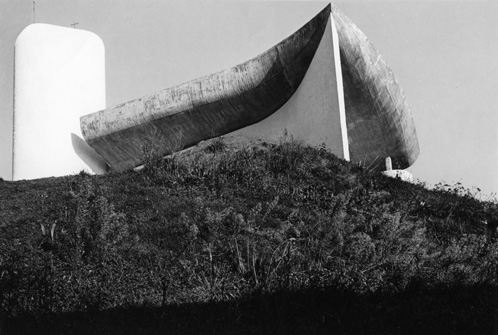
This time, Mr. Di Capua takes us to Ronchamp, France for a visit to what is arguably Le Corbusier’s masterpiece, the Chapel of Notre-Dame-du-Haut.

As a child I fell in love with the mysteries of this building. During my first visit to Europe in my 20s I made an architectural pilgrimage throughout France in search of Le Corbusier’s genius. In one of those I’ll-always-regret moments, I missed getting off the train in at Ronchamp. I don’t know what I was thinking (I think it was really early in the morning). Thanks, Franco, for taking me there!

If you’re not aware of Franco’s eye for detail, check out the links below. It’s all really good stuff.

Design Stories Social Network | Franco Di Capua’s Page


Filed under: ARCHITECTS + ARCHITECTURE, MID-CENTURY MODERN, PHOTOGRAPHY, VIDEO Tagged: architects, architecture, France", Franco Di Capua, Le Corbusier, Notre Dame du Haut, Ronchamp, VIDEO

ARCHITECTURE + PHOTOGRAPHY | Le Corbusier :: Lucien Hervé’s Ronchamp

$
0
0

Chapel of Notre-Dame-du-Haut, Ronchamp, France, 1950 © FLC-ADAGP

Le Corbusier and Lucien Hervé both chose pseudonyms for their professional careers (LC’s real name was Charles-Édouard Jeanneret and Hervé’s birth name was Lásló Elkan).

The two forged a decades-long partnership — LC designing and building his works of wonder whilst Hervé documented it all.

Lucien Hervé died on 26 June 2007 in his 97th year. He was born in Hungary— like so many of the 20th century’s great photographers (see box below) — on 7 August 1910 and arrived in Paris in 1929.

During his first decade in France, Hervé was attracted to the city’s fashion, art, and music worlds. He didn’t begin his photography career until 1938 when he began shooting photos for Marianne magazine. That was after his famous first photo, his self-portrait-in-a-mirror:

Hervé’s  famous self-portrait taken in front of his hotel room mirror on the rue du Faubourg-Poissonnière — his first photograph

Hervé was active in the French Communist Party and worked as a photojournalist during the Second World War. He was captured and sent to the Hohenstein prisoner of war camp, from which he escaped in 1940. He then joined the Resistance and changed his name.

His career took a decisive turn in 1949 when he met the Reverend Father Marie-Alain Couturier who introduced him to Matisse and advised him to go to Marseilles to experience Le Corbusier’s Unité d’Habitation, then nearing completion.

TOP > Unité d’Habitation, Marseille, 1949; 6 x 6 negative BELOW > Unité d’Habitation, 1952; cropped 6 x 6 negative.

Hervé was astounded by what he saw and took more than 600 photos of the housing-of-the-future project. He sent a selection of his images to the architect who responded: “You have an architect’s soul and you know how to look at architecture.” Their relationship lasted until Corbusier’s death by drowning in 1965.

Lucien Hervé was one of the world’s greatest architectural photographers. Other than his oeuvre documenting LC’s life, he photographed the works of Alvar Aalto, Marcel Breuer, Kenzo Tange, Richard Neutra, Oscar Niemeyer, and Jean Prouvé, among others. He is, I think, the Julius Schulman of France.

He is known especially for his images of Corbusier’s planned city, Chandigarh, and Niemeyer’s City of the Future, Brasília.

And I am extremely fortunate to have a piece of him in my home …

LC + LH in Chandigargh

3 August 1956

Cap Martin

R . . .

My Dear Hervé,

Received your program. I hope to read your . . . made here . . . a real creative work.

It’s really beautiful. Very beautiful to have seen, then chosen the link and the time (or theme?), then to have realised it.

. . .

My warmest congratulations on it. It’s not about photism, it’s the photo of the highest value or worth.


Filed under: ARCHITECTS + ARCHITECTURE, MID-CENTURY MODERN, PHOTOGRAPHY Tagged: architects, architecture, Corbusier, France", Hungarian photographers, Julius Schulman, Lásló Elkan, Le Corbusier, Lucien Hervé, Notre Dame du Haut, Ronchamp

ARCHITECTURE + PHOTOGRAPHY | Le Corbusier :: My Ronchamp ::: by Lucien Hervé

$
0
0

We lived in Surrey, England, for a spell. At the time I wasn’t attuned to life in Little Britain and found myself mostly in a negative mood. I did, however, substantially increase by vocabulary whilst eating take-away from Tesco (a cut above the rest) and reading the broadsheets (a definite improvement upon Canadian newspapers).

It was whilst reading one such newspaper that came across this image:

It was Le Corbusier — my hero — photographed by someone I’d strangely, given my preoccupation with LC, never heard of before: Lucien Hervé.

The photograph announced the opening of a show of Hervé’s photographs (including a lot of the master’s works) at the Michael Hoppen Gallery. So a pilgrimage was in order.  

I’d always wanted to go down to the King’s Road and visit Chelsea anyway to see if any remnants of “swinging London” were left over from the sixties. No remains were found. But we did uncover the amazing Hervé on a side street off the King’s Road.

The show at Michael Hoppen opened my eyes to a new way of seeing Le Corbusier and his work.

And I ended up spending mucho £££ (VAT thankfully refunded at the airport upon our getaway) to have a piece of Le Corbusier photographed by his chosen photographer.

This is the piece I chose from amongst the dozens on show:

I chose this one — “Maquette of Ronchamp, 1951″ — because I thought it special: if I recall correctly, it was the only photograph of a Le Corbusier maquette. That alone intrigued me in a room full of photographs of completed architectural works.

I was also drawn to the photographer’s perspective: how interesting that Hervé should focus on the chapel’s roof. After all, the building is all about that soaring, seemingly free-floating roof.

I liked it, paid for it, picked it up after the show came down, lived with it in Surrey for a spell, took it on the plane home to Vancouver, and it’s been hanging over me as I sleep ever since. It was one of the smartest investments I’ve ever made.

P.S.  The invites to the shows at the Michael Hoppen Gallery are superb. (Note to the Gallery: thanks for sending them my way!)

Still Available!

The gallery still has a few Hervé prints of Ronchamp. If you’re interested, check out this PDF:


Filed under: ARCHITECTS + ARCHITECTURE, CITIES | LONDON, EXHIBITIONS, MID-CENTURY MODERN, PHOTOGRAPHY Tagged: architects, architecture, King's Road, Le Corbusier, Lucien Hervé, Michael Hoppen Gallery, Notre Dame du Haut, Photography, Ronchamp

ARCHITECTURE + PHILATELY | Le Corbusier :: La Poste’s Ronchamp

$
0
0

ABOVE > The blue stamp issued 13 June 1964 was drawn and engraved by Jacques Combet, who was inspired by a postcard taken from a photograph made by German photographer, Hans Freytag (below) – issue of 19.65 million copies – withdrawn on 20 March 1965

On 8 February 1965 the same stamp appeared with a face value of Fr40 (the-then international postcard rate) in sepia-red, green, and brown – issue of 64 million copies – withdrawn on 27 April 1968

P.S. designKULTUR approves of La Poste’s corporate redo!

FROM >

TO >

Société Lausannoise de la Timbrologie | Ronchamp, the Spirit of Concrete

 Wikitimbres | Fiche/T01-000-1434: Ronchamp


Filed under: ARCHITECTS + ARCHITECTURE, ART + ARTISTS, GRAPHIC ARTS, MID-CENTURY MODERN, PHOTOGRAPHY, STAMPS + MONEY Tagged: architects, architecture, France", Hans Freytag, Jacques Combet, Le Corbusier, Notre Dame du Haut, Philately, Postcard, Ronchamp, Stamps